CABG / Heart Bypass Surgery
Case Study 1:
Off-Pump Coronary Artery Bypass Grafting in a 58-Year-Old Male with CAD (TVD)
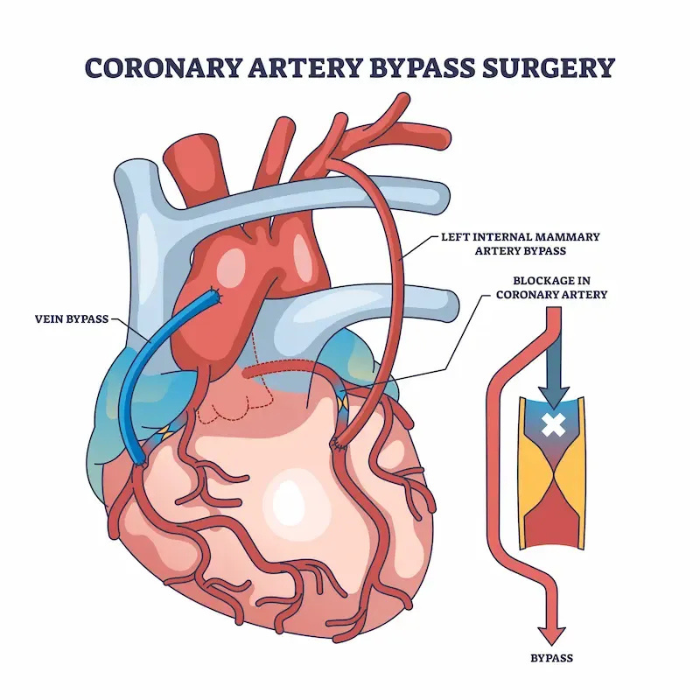
Off-pump Coronary Artery Bypass Grafting (CABG) in a 58-year-old male with triple vessel coronary artery disease and severe LV dysfunction, successfully treated with three grafts at Ship International Hospital, resulting in an uneventful recovery and excellent postoperative outcome.
This is a case of Off Pump Coronary Artery Bypass Grafting (CABG) in a 58 years male patient who experienced chest pain and shortness of breath approximately a few months. After medical reports, tests, and investigations, the diagnosis was CAD (TVD) with Severe LV Dysfunction and DM, and Off-pump Coronary Artery Bypass Grafting (CABG) x 3 Grafts was advised and done.
Patient’s Background and Health Concerns
A 58 year old male patient, Md Abdullah Khan ((pseudonym used for patient privacy) experienced chest pain and shortness of breath approximately a few months before seeking medical care. These symptoms led him to consult doctors before further management. The symptoms experienced by the patient included:
- Chest pain
- Shortness of breath
He consulted several Local GP and Cardiologists. Then he visited me in Ship international Hospital for further evaluation and treatment.
Diagnosis and Medical Assessment
Medical reports, tests, or investigations were used to confirm the diagnosis. These investigations were done to identify the disease. The investigations included:
- ECG
- CXR
- Transthoracic Echocardiography (Color Doppler)
- CT scan of chest with contrast
- Blood tests
Based on these investigations, the diagnosis was CAD (TVD) with Severe LV Dysfunction and DM.
Treatment Plan and Surgical Procedure
After confirming the diagnosis, Off-pump Coronary Artery Bypass Grafting (CABG) x 3 Grafts { LIMA to LAD and RSVG to OM and PDA (Sequential) } was advised. The patient was admitted on 2nd September 2024 and the operation was done on 7th September 2024.
The surgery was performed by Dr. Mohammad Moniruzzaman MBBS, MS (Cardiovascular Thoracic Surgery), Senior Consultant in the cardiovascular Surgery department at Ship International Hospital.
It was an Open Heart surgery started by placing a small incision in the middle of the chest. After harvesting LIMA and Great Saphenous vein, heparinization was done. Then LIMA to LAD was done. Then proximal anastomosis was done and RSVG to OM1 and PDA (Sequential) was done.
Then checked for any bleeding points. Then the chest was closed in layers leaving chest drain tubes and temporary pacing wire (TPM) in situ. The patient was shifted to CICU.
Estuation (Removal of life support) was done the next morning. His drain tube was removed on the second postoperative day (POD) and TPM removed on 5th POD. His postoperative period was uneventful.
Outcome and Patient’s Current Health Condition
The patient took the normal course to recovery and was discharged on 7th POD. After treatment, the patient is now symptom free, happily living a normal life and on coming in regular follow up. There is now no chest pain.
Patient feedback on treatment, care, and overall experience was Excellent. The next follow-up is on 24th July 2026. It involves taking clinical history from the patient, some routine investigations, and additional investigation if required.
The operation done in this case is a major operation which carries some risks. All of our team members and hospital staff, including OT nurses, CICU nurses, and cabin nurses, played their role in a very efficient way. Most importantly, the patient and the patient party kept faith and full confidence and allowed everything for her betterment.
Final Thoughts
This case demonstrates organized clinical management of coronary artery disease from diagnosis to recovery. Careful investigation, planned surgical treatment, and structured postoperative care supported steady healing, symptom control, and safe discharge without reported postoperative issues.
Patient details have been modified and a pseudonym has been used to protect privacy. This case is shared for clinical documentation and educational reference, reflecting routine surgical practice, team coordination, and follow-up planning in cardiac surgical care.
Case Study 2:
Off-Pump Coronary Artery Bypass Grafting in a 40 Years Male Patient
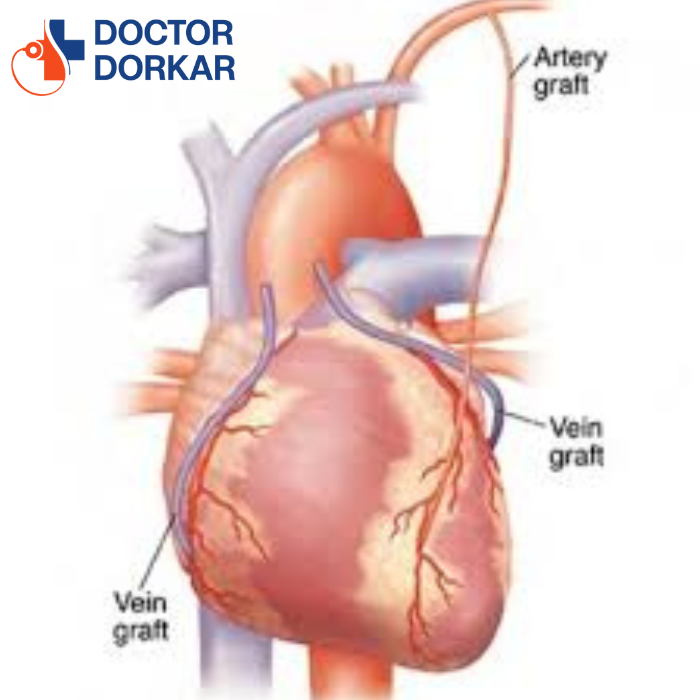
Off-pump coronary artery bypass grafting (OPCABG ×3) performed on a 40-year-old male patient with double-vessel coronary artery disease and moderate left ventricular dysfunction, resulting in an uneventful recovery and complete symptom relief.
This is a case of Off Pump Coronary Artery Bypass Grafting (CABG) in a 40 years 11 months male patient who experienced severe chest pain and shortness of breath approximately 3 months. After medical reports, tests, and investigations, the diagnosis was CAD (DVD) with Moderate LV Dysfunction, HTN and DM, and Off-pump Coronary Artery Bypass Grafting (CABG) x 3 was advised and done.
Patient’s Background and Health Concerns
A 40 years 11 months male patient, Md Aminul Haq, (pseudonym used for patient privacy) experienced severe chest pain and shortness of breath approximately 3 months before seeking medical care. These symptoms required urgent medical attention. The main health concerns reported by the patient included:
- Severe chest pain
- Shortness of breath
He rushed to NICVD within hours and was admitted and diagnosed as Acute MI (Anterior). STK was given. After treatment, he was discharged from NICVD one week later, and a coronary angiogram was done two weeks later (9th July 2025). The coronary angiogram revealed CAD (DVD). Then he visited me in Ship international Hospital.
Diagnosis and Medical Assessment
Medical reports, tests, or investigations were used to confirm the diagnosis. These investigations were done to identify the cardiac condition. The investigations included:
- ECG
- CXR
- Transthoracic Echocardiography (Color Doppler)
- CT scan of chest with contrast
- Blood tests
Based on these investigations, the diagnosis was CAD (DVD) with Moderate LV Dysfunction, HTN and DM.
Treatment Plan and Surgical Procedure
After confirming the diagnosis, Off-pump Coronary Artery Bypass Grafting (CABG) x 3 LIMA to LAD and RSVG to OM1 and PDA was advised. The patient was admitted on 20st September 2025.
The operation was done on 22th September 2025. The surgery was performed by Dr. Mohammad Moniruzzaman MBBS, MS (Cardiovascular Thoracic Surgery), Senior Consultant in the cardiovascular Surgery department at Ship International Hospital.
It was an Open Heart surgery started by placing a small incision in the middle of the chest. After harvesting LIMA and Great Saphenous vein, heparinization was done. Then LIMA to LAD and RSVG to OM1 and PDA was done. Then proximal anastomosis was done. Then checked for any bleeding points. Then the chest closed in layers leaving chest drain tubes and temporary pacing wire (TPM) in situ. The patient was shifted to CICU.
Extubation (Removal of life support) was done the next morning. His drain tube was removed on the second postoperative day (POD) and TPM removed on the 5th POD. His postoperative period was uneventful.
Outcome and Patient’s Current Health Condition
The patient took the normal course to recovery and was discharged on 9th POD. After treatment, the patient is now symptom free, happily living a normal life and on coming in regular follow up. There is now no chest pain.
Patient feedback on treatment, care, and overall experience was Excellent. The next follow up is on 8th July 2026. It involves taking clinical history from patients, some routine investigations, and additional investigation if required.
The operation done in this case is a major operation which carries some risks. All team members and hospital staff, including OT nurses, CICU nurses, and cabin nurses, played their role in a very efficient way. Most importantly, the patient and the patient party kept faith and full confidence and allowed everything for her betterment.
Final Note
This case reflects structured clinical care from diagnosis through recovery in complex coronary artery disease. Careful assessment, planned surgical intervention, and coordinated postoperative monitoring supported stable recovery and complete symptom relief without postoperative complications.
Patient details have been modified and a pseudonym has been used to protect privacy. This case is presented for clinical documentation and educational reference, demonstrating standard surgical practice, team coordination, and follow-up planning in cardiac surgical care.